At a glance
"ADU" covers everything from a bedroom with a kitchenette to a two-bedroom cottage. The type you choose decides your cost, your permit path, how much privacy everyone gets and, in some places, whether you have to live on the property.
The types
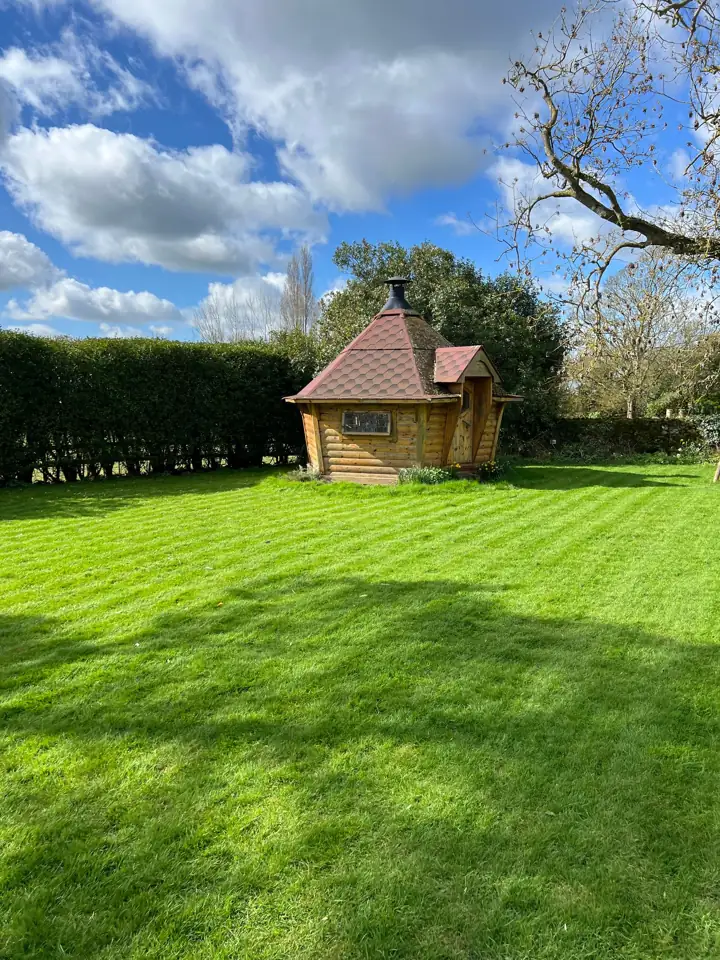
- Detached ADU: a separate building in the yard.
- Attached ADU: an addition connected to the house, or a unit over a garage.
- Conversion: an ADU made from existing space, such as a garage, basement or part of the house.
- Junior ADU (JADU): a small unit inside the house. This is a California term.
What a JADU is in California
State law defines a JADU as a unit of no more than 500 square feet of interior living space, contained entirely within a single-family residence. It needs its own entrance and a kitchen, but it can share a bathroom with the main house.
The sharing rule matters. If the JADU shares a bathroom with the main house, the owner must live on the property, in either the JADU or the rest of the house. If the JADU has its own bathroom, there is no owner-occupancy requirement. JADUs also cannot be sold separately from the house.
JADUs have other advantages under California law:
- No impact fees for a JADU of 500 square feet or less.
- Not treated as a new residential use when calculating water and sewer connection fees, unless built together with a new single-family home.
- No fire sprinklers required unless the main house requires them.
- State law allows one ADU and one JADU on the same single-family lot in many cases, so you may be able to build both.
What each type costs
The statewide owner survey gives medians by type, from owners who built ADUs in California:
- Detached: $180,000 ($300 per square foot)
- Addition: $150,000 ($250 per square foot)
- Garage conversion or expansion: $90,000 ($189 per square foot)
- Conversion inside the house: $100,000 ($173 per square foot)
The survey did not report JADUs separately. A JADU is a type of interior conversion, so the conversion figures are the closest guide. Detached units were the most popular type, at 53 percent of the sample, and also the most expensive.
How to choose
Think about who will live there and for how long.
- For a parent or adult child: a JADU or attached unit keeps people close and costs less. A shared bathroom may be fine for family.
- For a long-term tenant: a detached unit or a conversion with its own bathroom gives both households privacy and avoids the owner-occupancy rule.
- For resale flexibility: a detached unit with separate utilities is usually the easiest for a future buyer to use however they want.
- For the lowest cost: convert a garage or existing room. But check that you can replace any parking you lose if your city still requires it.
Things people overlook
- Garage conversions still need to meet code. Ceiling height, insulation, windows for emergency exit and the slab all need to work for a home.
- The yard you give up. A detached unit takes outdoor space from the main house. Plan where each household's private outdoor area will be.
- Financing. Fannie Mae requires an ADU to have its own living, sleeping, cooking and bathroom space and access without going through the main house. A JADU that shares a bathroom may not count as an ADU for some loans.
- Sound. Attached units share walls. Ask about sound insulation in the quote.
Quick comparison checklist
- Who will live there, and will they share a bathroom?
- Do you plan to live on the property long term?
- How much yard can you give up?
- Is there an existing garage or room that could be converted?
- Will you need separate utility meters?
Bottom line
If you are in California, want a place for family and plan to stay, a JADU is often the cheapest way to add a home. If you want rental income from a stranger, the most flexibility or the best resale, a detached unit or a conversion with its own bath usually makes more sense.
Before you call a builder: answer six questions to pick a type, rough out a budget, and save builders to My Stack as you go.